Showing posts with label art. Show all posts

Thursday, May 19, 2016

Physics and Art: Pollock

This winter, one of my students came to me with an idea to create an 'art robot' - a robot that could create a piece of art. After some research, she found a Discover article summarizing Richard Taylor's work on fractal analysis of Jackson Pollock's drip paintings. Note that there is considerable disagreement over whether this is valid, as the range of available scales (only about three orders of magnitude) is generally considered too small to adequately authenticate fractal structure.

This hiccough notwithstanding, we set about to create a chaotic pendulum that could create paintings with similar fractal dimensions to Pollock's. The general idea of structural complexity is shown in a graphic from the first reference:

The fractal dimension measured by Taylor of Pollock's works is in the middle range: 1.5-1.6. A non-chaotic conical pendulum's traces are not complex enough to reproduce this (left image below), but a chaotic pendulum can (middle and right below, from second reference above):
In order to make the traces chaotic, we attached a pulley controlled by a stepper motor to the pivot of the pendulum and had an Arduino quickly oscillate the pivot infrequently (slightly lower period than the pendulum's natural period). A Glowscript simulation of two such pendula starting with nearly identical initial conditions show quick divergence, the result of the nonlinear chaotic system.

In practice, we gave the system some random horizontal driving as well, as it lost amplitude. The result is a set of five attractive canvases. The set will adorn the hall near my room, along with a poster explaining the process, showing the derivation, and discussing the results (I co-opted some MATLAB code to determine the fractal dimension of each foreground color-layer of each painting and each painting's average fractal dimension).




Tuesday, February 19, 2013

Practice: Art and Physics

I took a drawing class last summer - the first time that I had any instruction to speak of in art. I did this partially for pragmatic purposes (diagrams in class, etc.) and partly for enjoyment. I wasn't great at the beginning, and I still am not great, but I'm so much better now than when I began. I'm also much better than I thought that I could be at drawing. I thought that I knew what types of drawing I would be good at and what types I wouldn't be good at, but both of those estimations were off of the mark.

The transfer to physics learning (or any other learning) is real:

  • Even if you're not good at something, you can improve dramatically through intentional practice and engagement with feedback. The 'intentional' and 'engagement' parts are really important.
  • You can't be sure about what your 'talents' are before putting in work. We're obviously not all going to be Paganini, but we could all improve a great deal by practicing the violin purposefully over the course of a long time period.
  • Consistent practice over time is better than fits and spurts of intense work. I haven't practiced a lot, but I'm now doing an open figure drawing session twice per month. I could get better faster by practicing more often, but doing the time that I am doing all at once and then stopping for a year wouldn't be as productive as spreading it out.
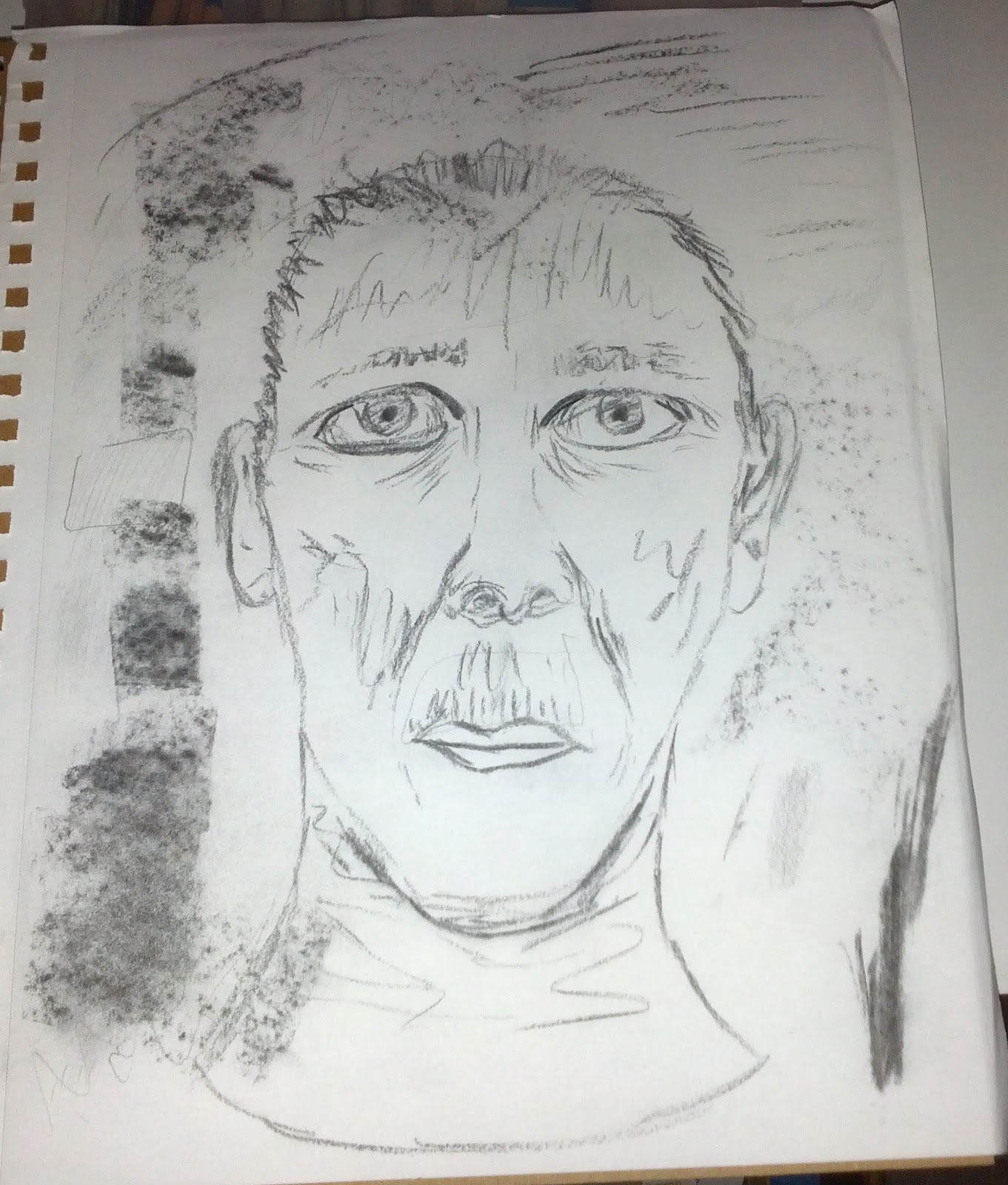
My first attempt at a face, back in the summer:

My most recent face, from yesterday: It's not the best face ever drawn, but it's a ton better than I even thought that I could do!

Thursday, June 21, 2012

Art Class, Day 1

My school has a great program of faculty grants, wherein teachers apply for grants to do things during the summer that are enriching but have nothing to do with their jobs.  I love this program for a lot of reasons.  In the past, I've taken a guitar-making class and drum set lessons. This summer, I'm taking a drawing class at the Delaware Art Museum.

This is an interesting experience for me because I've never taken an art class before. I'm not particularly artistic, but I thought that it'd be good for me. I'd like to draw some cartoons for Anders's walls depicting some fundamentals of physics, so this'd be a good prep for that. I'm not a good artist, so there's that.

Most interestingly, it's a chance for me to be a student again.  Nervous, unsure, decidely non-expert - all things that our students experience constantly, but that we're far removed from now.  It's a great chance to build up that empathy and to (re)gain perspective on what it's like to be learning something for the first time.

I didn't really even know what all of the tools were that I was directed to buy, but there I was, with my shopping bag full of 15 different kinds of dark stuff to smear on paper. Of all of the things that I learned tonight, the most important one probably has a lot to do with learning physics:

     Draw what you see.

Our teacher kept saying that, and it was really true.  Don't draw what you know.  Don't draw what you remember.  Don't draw what you think should be there.  Don't draw what you think will look good with what you already have.  Draw what you see.

In physics, I see that as not trying to shoehorn a new problem into the mold of an old one, not trying to sound artificially science-y when describing a situation, not trying to figure out what the teacher wants you to write, not worrying when you're not sure how what you're doing will lead to the answer. Just physics what you see.

I want to be public with the process here, because I want to be upfront for my students that it's cool to struggle with something that's difficult, it's fine to try in an area that you're not "into," it can be fun to work hard, and that being terrified about something doesn't mean that you shouldn't attack it head-on.  So, we'll have five more weeks of class. Hopefully, I'll improve :)

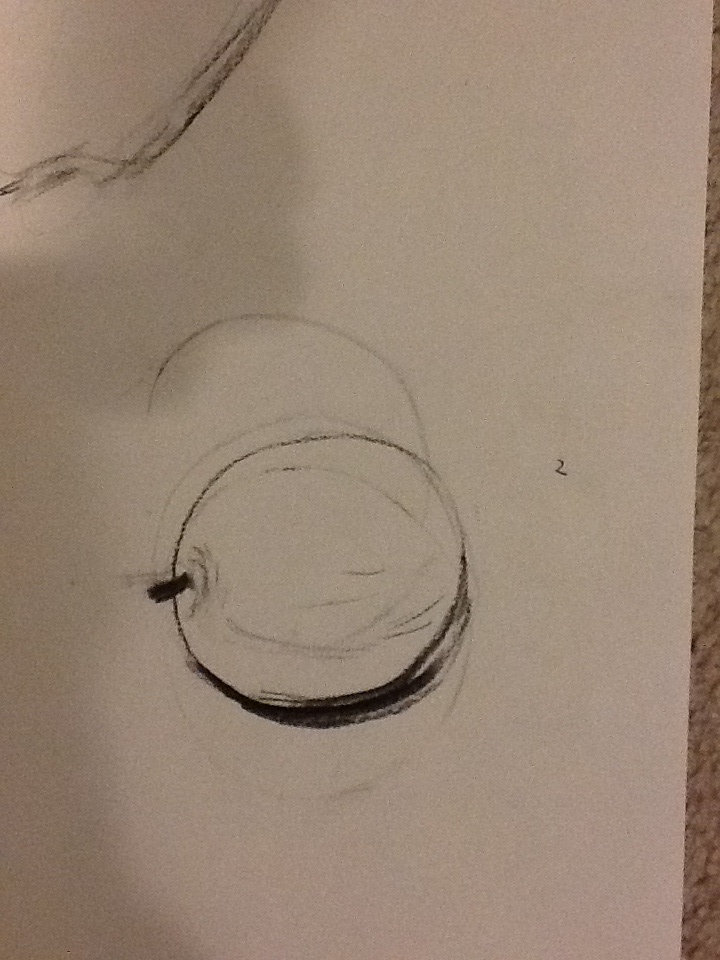
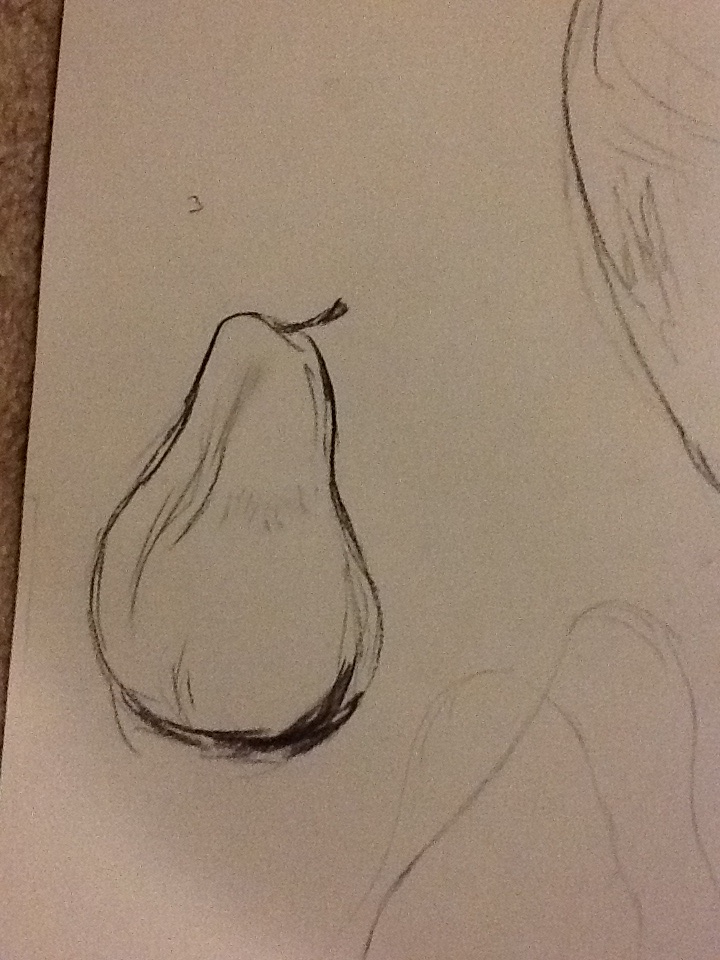
Some pics from tonight!